 27/04/2026
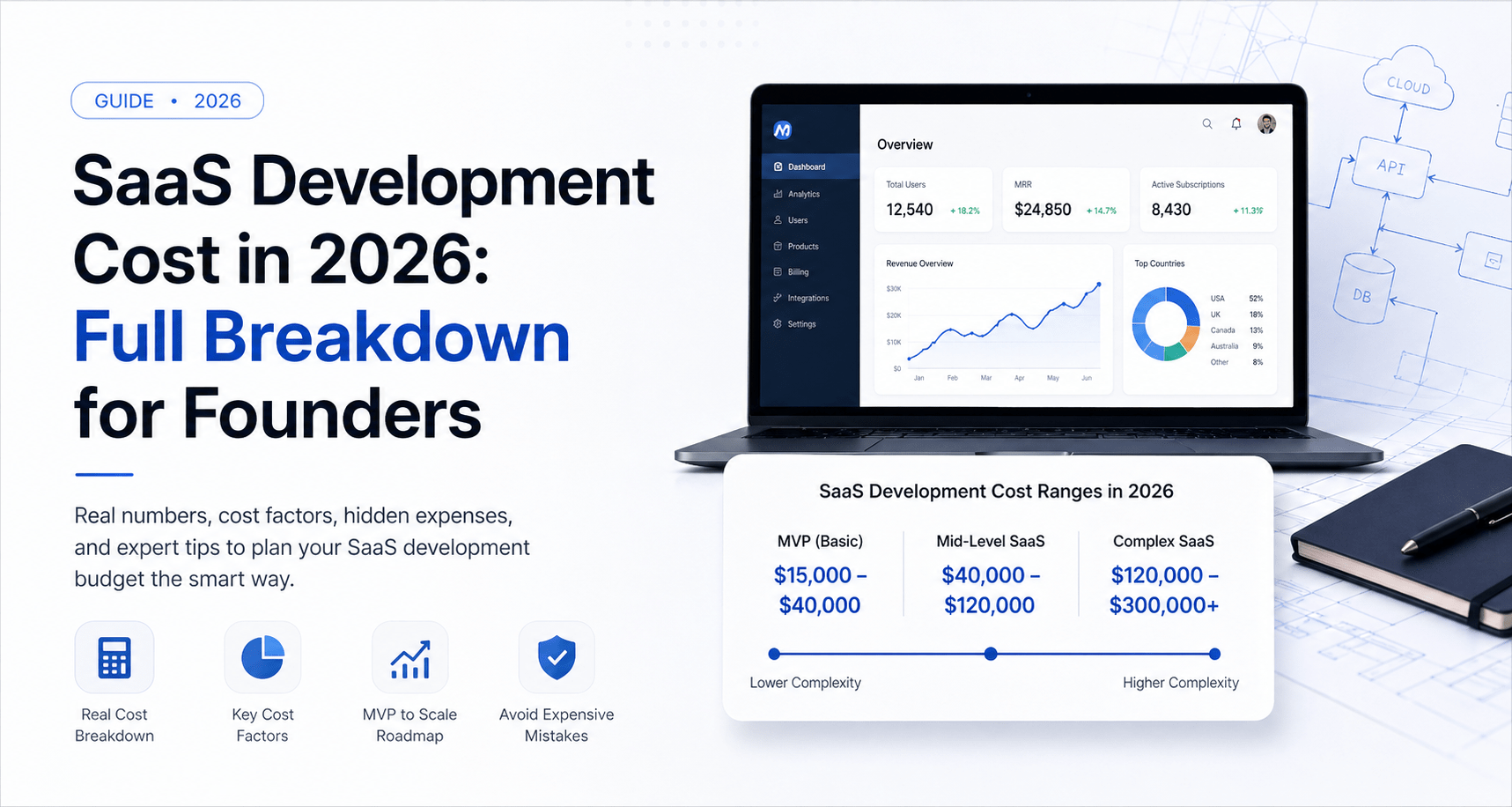
Why SaaS Projects Go Over Budget – And How to Control Development Costs in 2026
Most founders don’t fail because of a bad idea.
They fail because their SaaS project becomes unpredictable – in scope, architecture, and cost.
You start with a simple MVP idea.
Then it turns into a $80k+ product with unclear timelines.
This article breaks down:
- why SaaS costs spiral out of control
- where most money is wasted
- how to design a predictable and scalable system from day one
If you’re planning a SaaS product in the US market – this is critical.
The Real Problem: SaaS Is Not Just Development
Most people think SaaS cost = development hours.
That’s wrong.
A real SaaS product includes:
- architecture decisions
- UX logic
- infrastructure
- integrations
- scaling strategy
This is why projects fail when treated like simple builds.
If you’re approaching it as “just development”, you’re already setting yourself up for budget overruns.
This is where SaaS & Product Development becomes critical – not coding, but system design.
Why SaaS Projects Go Over Budget
1. No Clear System Architecture
This is the #1 reason.
Without architecture:
- features get rebuilt multiple times
- scaling breaks the system
- integrations become messy
A simple feature can double in cost if not planned correctly.
This is exactly why Architecture Consulting exists – to avoid rebuilding the same thing twice.
2. Wrong MVP Strategy
Most MVPs are either:
- too big → expensive
- too small → useless
The goal is not “cheap MVP”.
The goal is strategic MVP.
A proper MVP:
- validates the core idea
- is scalable
- doesn’t require full rebuild later
This is where MVP Development plays a key role.
3. Ignoring Automation Opportunities
Manual processes kill scalability.
Examples:
- manual onboarding
- manual billing handling
- manual reporting
This increases long-term costs massively.
Instead, systems should be designed with automation from the start via
Business Systems & Automation and
Workflow Automation.
4. Poor UI/UX Decisions
Bad UX leads to:
- more support requests
- lower conversion rates
- redesign costs
A strong product requires system-level design thinking, not just UI.
That’s why UI/UX & Product Design and
Product Design & UX Systems for Scalable Web Products are part of cost optimization – not just visuals.
5. No Technical Partner
Hiring developers ≠ building a product.
You need someone who:
- thinks in systems
- understands business impact
- plans long-term scalability
This is exactly the role of
Technical Partnership.
Without it, decisions are reactive instead of strategic.
Where Money Gets Wasted in SaaS Development
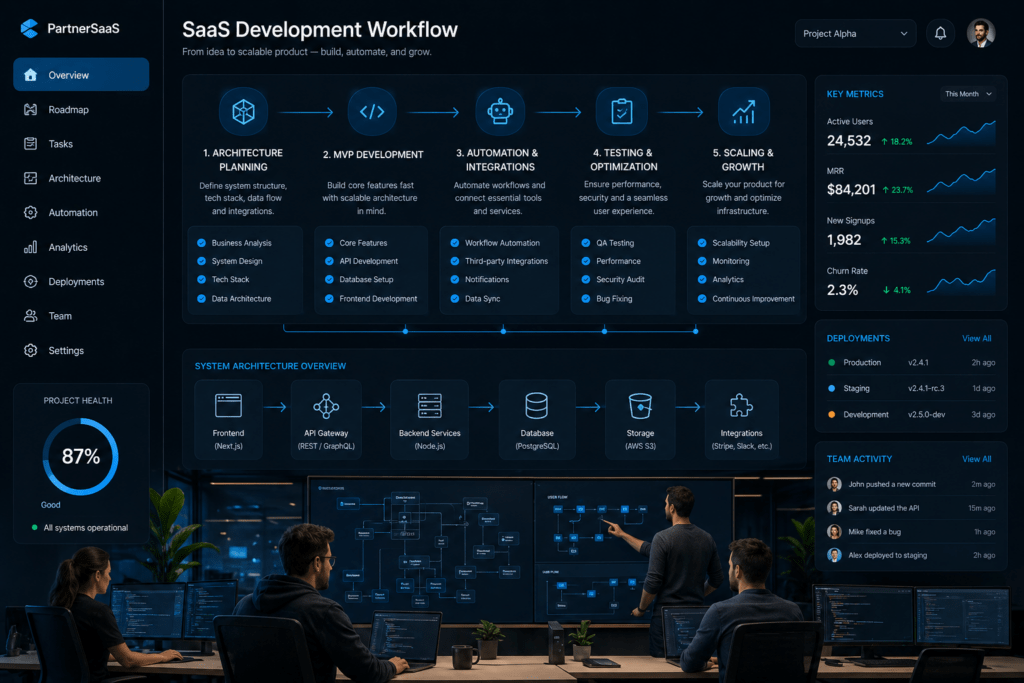
Most budget waste comes from:
- rebuilding features
- fixing bad architecture
- scaling issues
- redesigning UX
- rewriting integrations
These problems usually appear 2–6 months after initial launch.
This is why planning matters more than coding.
How to Control SaaS Development Costs
1. Start With Architecture, Not Features
Before writing code:
- define system structure
- define data flow
- define integrations
This prevents 30–50% of future costs.
2. Build Scalable MVP
Not a prototype. Not a full product.
A scalable MVP:
- has clean architecture
- supports growth
- avoids future rebuild
3. Automate Early
Automate:
- onboarding
- billing
- notifications
- reporting
This reduces operational costs long-term.
4. Use Modular Development
Break system into:
- services
- modules
- independent components
This allows scaling without rewriting everything.
Often implemented via
Web Application Development and
Dashboard Development.
5. Optimize Performance From Day One
Performance affects:
- SEO
- user retention
- infrastructure costs
How This Connects to Your Business Growth
If you’re building SaaS in the US market, your goal is not just launching.
Your goal is:
- scalability
- predictable cost
- fast iteration
This is where systems thinking wins.
STOP YOUR SAAS PROJECT FROM GOING OVER BUDGET
Worried your SaaS idea might turn into an unpredictable and expensive build? We’ll analyze your concept, define a scalable architecture, and show you exactly where costs can go wrong - and how to control them from day one.
Conclusion
SaaS projects don’t become expensive because of development.
They become expensive because of:
- bad planning
- missing architecture
- lack of system thinking
If you approach your product as a scalable system from day one – you control cost, not react to it.