
Fintech Investment Dashboard and Client Portal Development
A custom investment management web platform built with Laravel, Vue 2, and custom API integrations to handle user onboarding, identity verification, portfolio selection, deposits, withdrawals, and account management.
It provides a complete investor dashboard with portfolio tracking, payment flows, verification status, transaction history, and secure profile settings in one streamlined fintech interface.
This project is a comprehensive investment management web platform designed to provide users with a complete digital experience for registering, verifying their identity, funding investment portfolios, monitoring account performance, and requesting withdrawals through a secure client dashboard.
The goal of the platform was to turn a complex investment workflow into a clean, understandable, and structured web product that feels accessible for end users while still supporting the operational requirements of an investment business. Instead of presenting users with disconnected pages or manual back-office processes, instead of fragmented workflows, everything is combined into one unified system into one unified system: account creation, personal data submission, verification, portfolio selection, payment, withdrawals, transaction visibility, profile management, and account status updates.
From a product perspective, this was not just a website. It was a multi-step fintech web application with strong emphasis on onboarding logic, account state transitions, financial interaction flows, and dashboard usability.
What We Built
We developed a full-featured investment platform using Laravel, Vue 2, and a custom API architecture. The system includes both public-facing authentication and onboarding pages as well as a private user cabinet where investors can manage their account and actions.
1. Authentication and Account Access
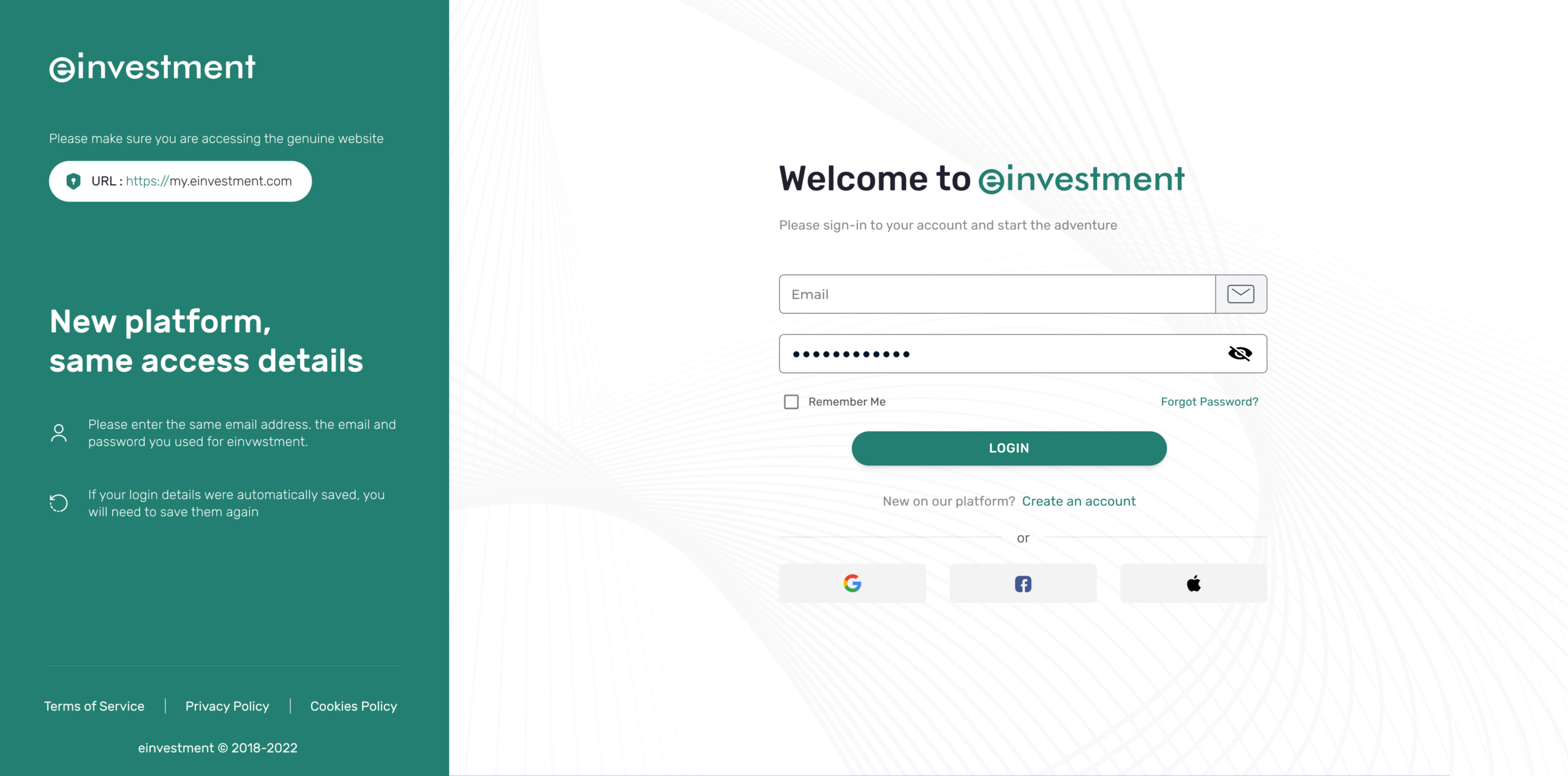
We created a branded login experience with:
- sign-in page
- create account flow
- forgot password flow
- password reset page
- social login options
- persistent account access experience for returning users
The login and password reset area was designed to feel trustworthy and simple, which is especially important for finance-related platforms. Financial users are very sensitive to credibility, clarity, and friction during access flows, so the UI needed to communicate security and professionalism from the first interaction.
2. Multi-Step User Registration and Onboarding
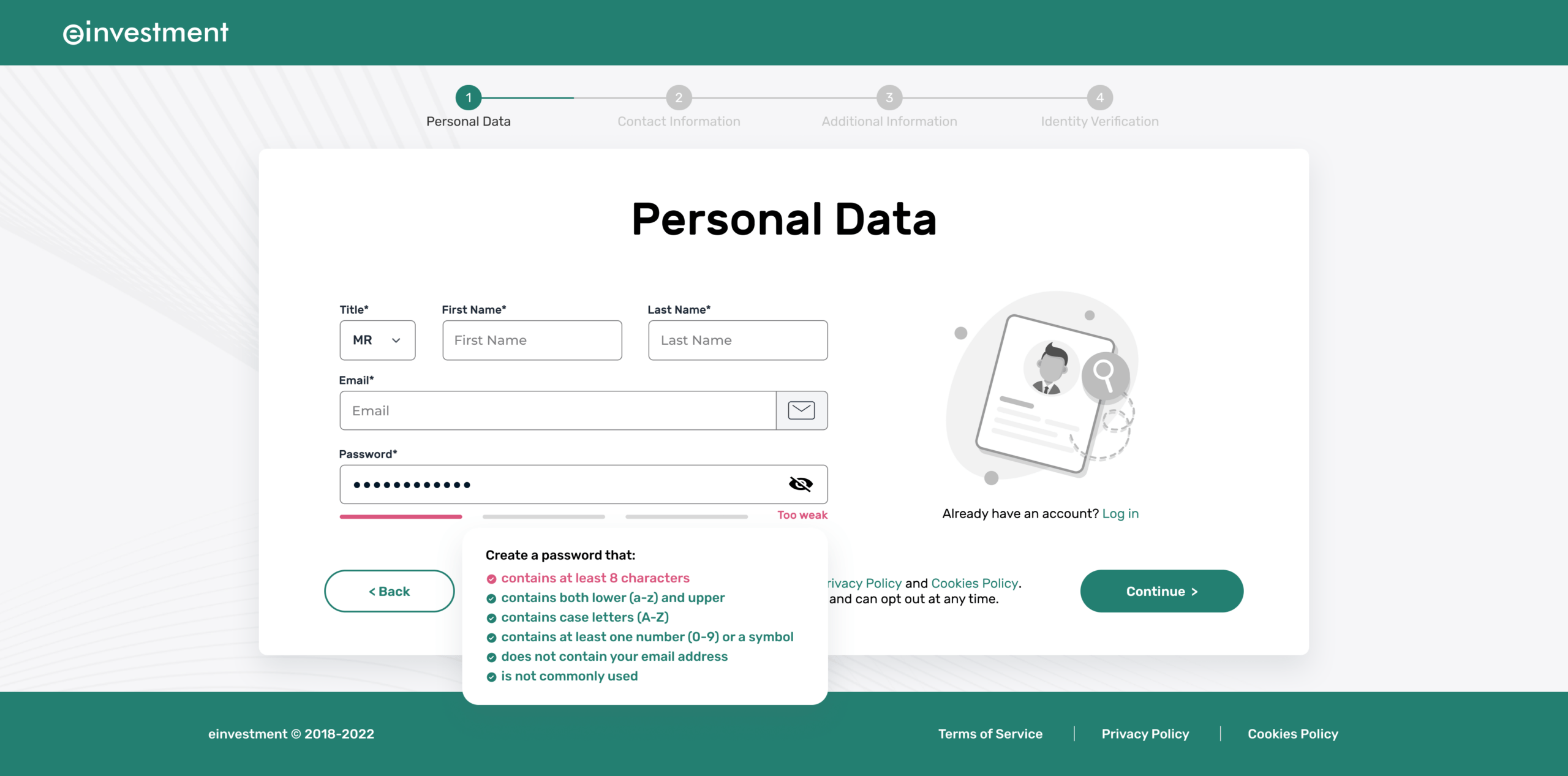
One of the most important pieces of the platform is the structured onboarding sequence. We implemented a step-by-step registration flow that guides users through:
- personal data
- contact information
- additional information
- identity verification
This is a critical feature for investment platforms because user onboarding is not just about collecting an email and password. It often involves collecting structured personal details, validating account readiness, and preparing the user for compliance-related processes such as KYC or identity verification.
This flow was designed carefully with visual step indicators, progress states, validation feedback, and strong form clarity. This helps reduce abandonment and makes a complex process feel manageable.
3. Identity Verification Integration Flow
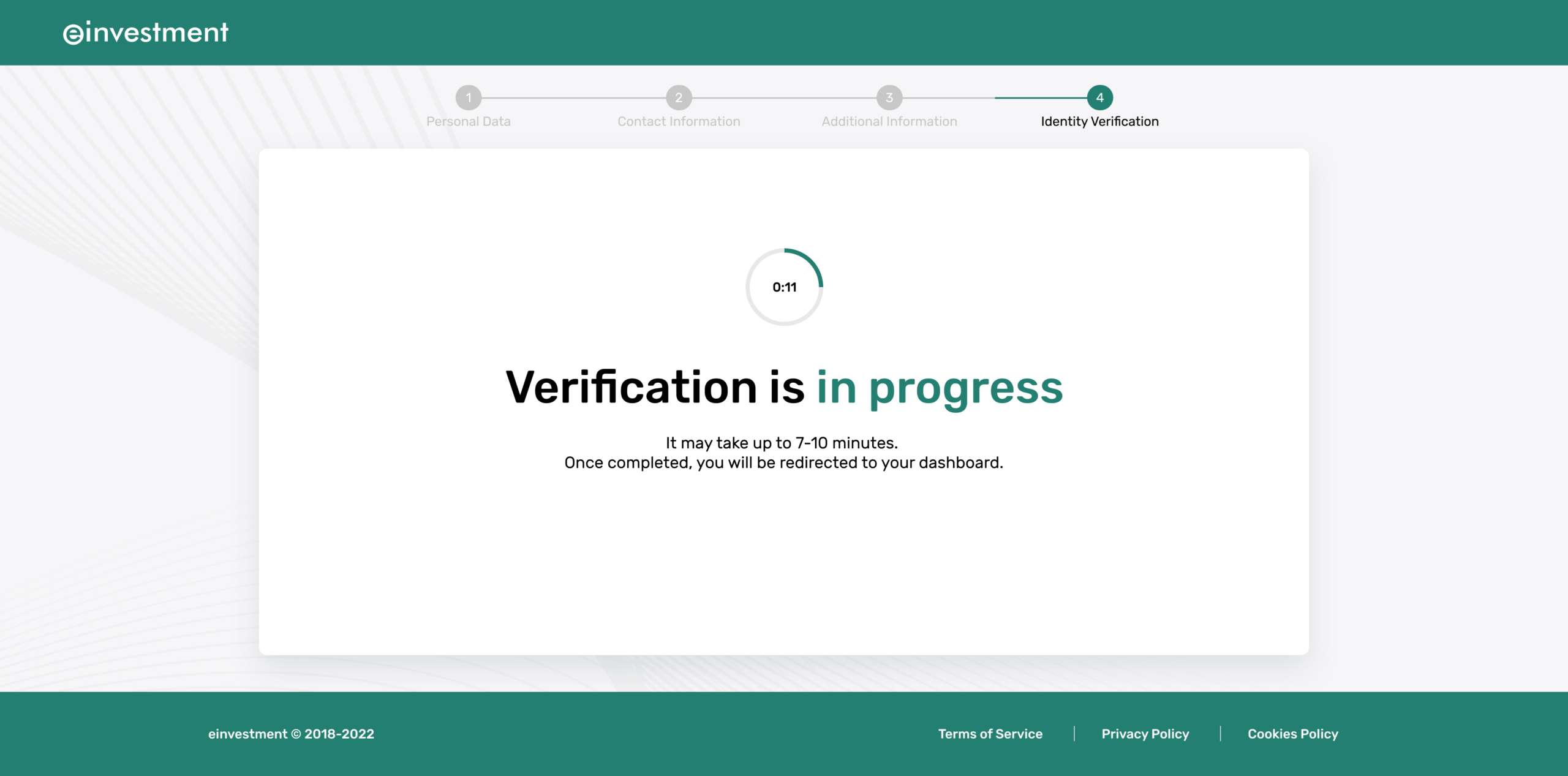
A major functional area of the system is identity verification. We built verification status pages and related UI states showing:
- unverified account state
- verification action entry point
- verification in progress
- verified status reflected inside the account
This is especially important in fintech and investment products where access to deposits, withdrawals, or specific account features may depend on verification status. The interface clearly communicates whether the user is verified, not verified, or currently undergoing verification checks.
From a system design standpoint, this means the platform had to support:
- verification status tracking
- conditional UI rendering depending on account state
- onboarding progression logic
- account restrictions or unlock conditions tied to verification
That kind of logic is one of the core backend responsibilities in a financial web platform.
4. Investor Dashboard
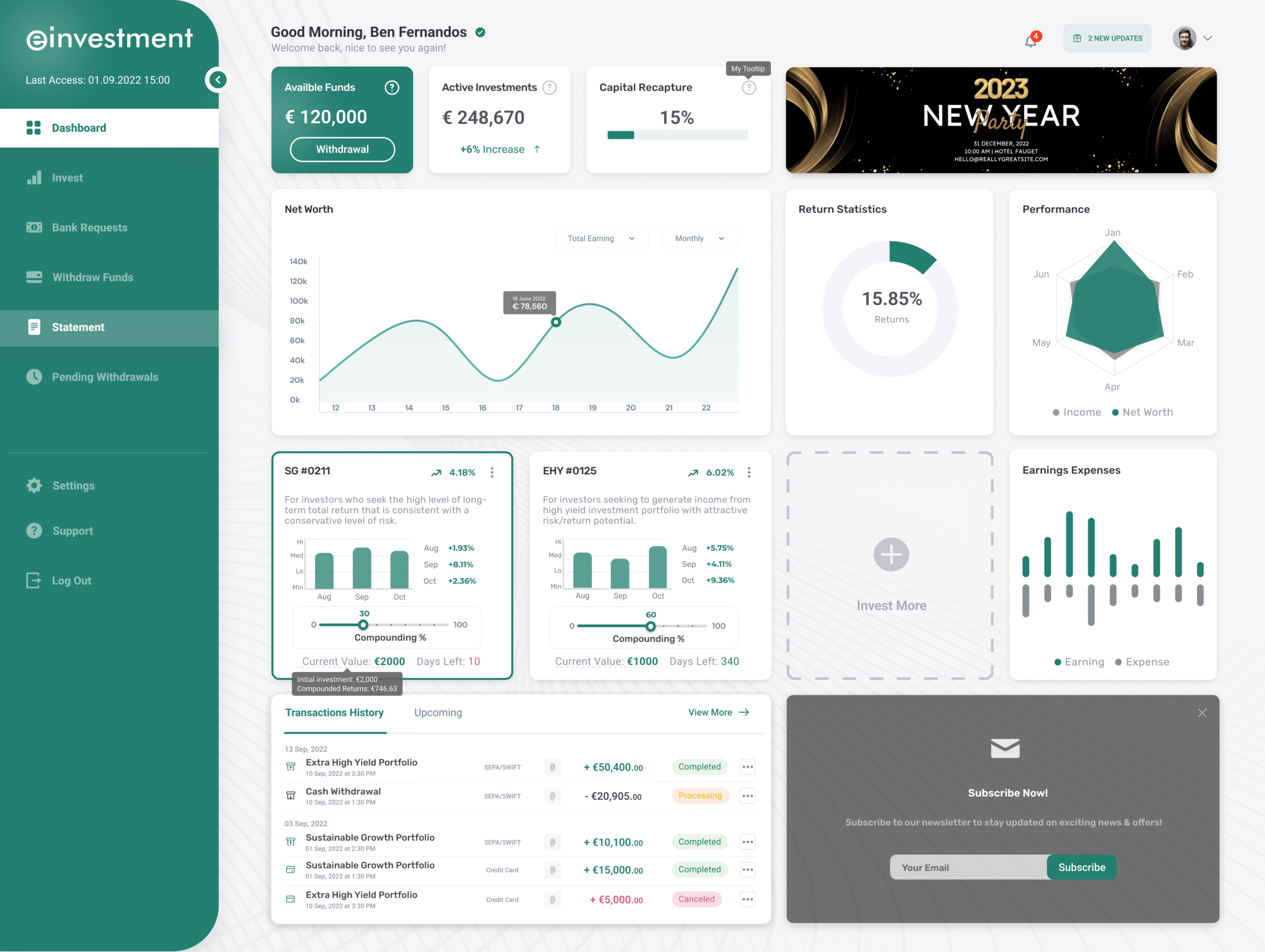
We also developed the main investor dashboard, which acts as the core user workspace after login. The dashboard is designed to give users a quick overview of their financial position and activity.
The interface includes:
- available funds
- active investments
- capital recapture metrics
- return statistics
- net worth chart
- performance data
- investment cards
- earnings and expenses blocks
- transaction history
- notifications and updates
This dashboard is a good example of combining business data with user-friendly frontend presentation. It is not enough to display raw numbers; financial dashboards must provide a balance between clarity, confidence, and visual structure. The platform presents complex information through cards, charts, summary blocks, and structured sections that help users quickly understand their account.
5. Investment Flow
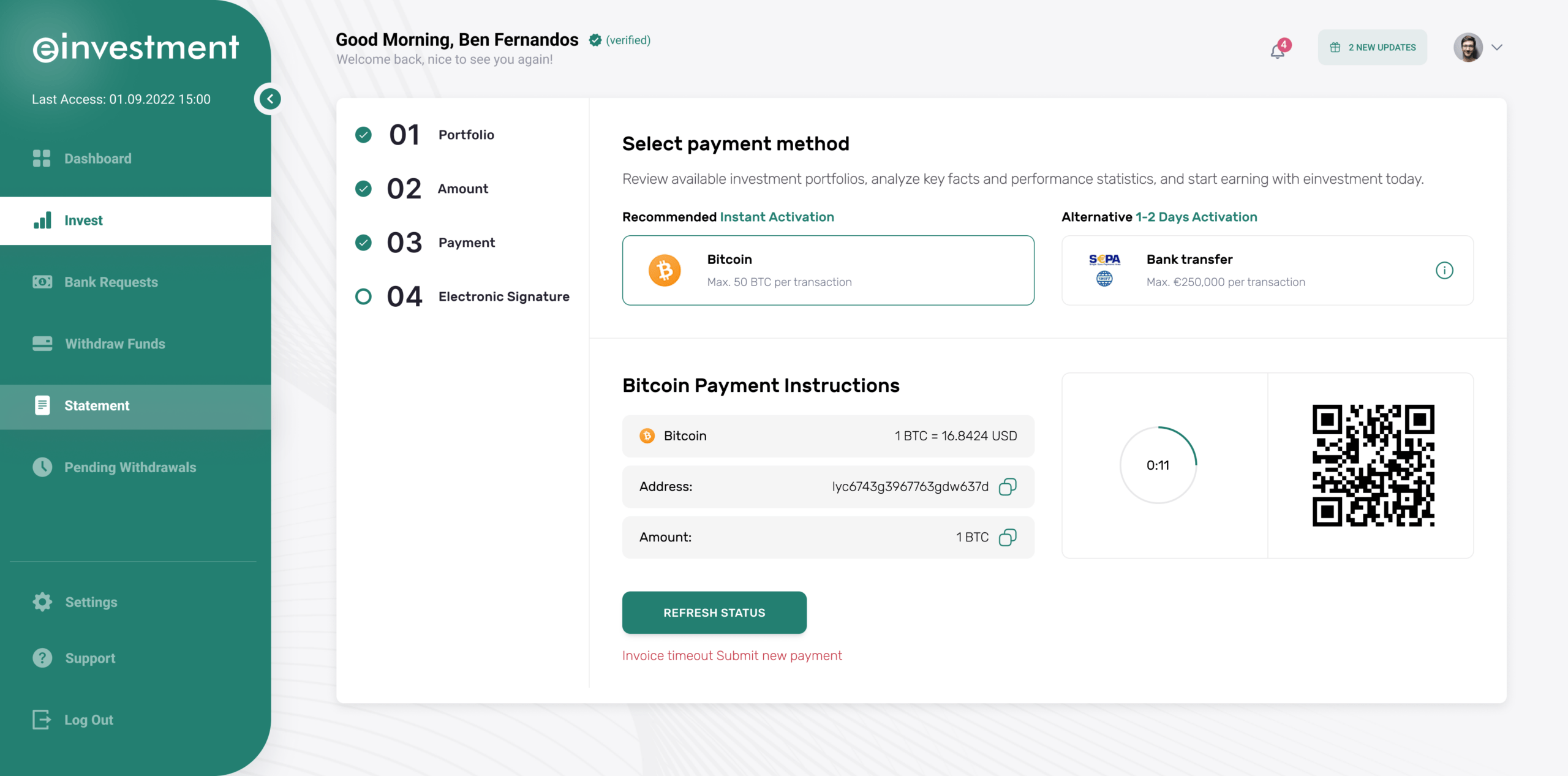
The platform includes a detailed investment creation workflow where users can:
- select an investment portfolio
- enter investment amount
- define compounding level
- review estimated APR
- choose payment method
- proceed through payment instructions
- finalize the process with electronic signature / final verification stages
This is one of the strongest parts of the project because it shows product thinking, not just page development.
The investment flow is broken down into logical steps:
- portfolio selection
- amount configuration
- payment
- signature / confirmation
The platform also visualizes projected return values and key investment parameters such as:
- initial investment
- compounding rate
- subscription period
- investment product type
- projected performance values
This kind of experience helps users make decisions with more confidence because the system explains what they are doing while they interact with financial inputs.
6. Payment Method Handling
The platform supports different payment options, including:
- Bitcoin payments
- bank transfer / wire transfer
For crypto payments, the interface includes:
- wallet/payment address
- amount
- QR code
- invoice timing / status
- refresh status interaction
For bank transfer flows, the system allows the user to view or submit banking details and proceed through a separate payment experience.
This means the application had to support different payment scenarios with different UI and backend logic, rather than a one-size-fits-all payment page. That is important in financial systems where payment rails often differ significantly in both UX and processing behavior.
7. Withdraw Funds Module
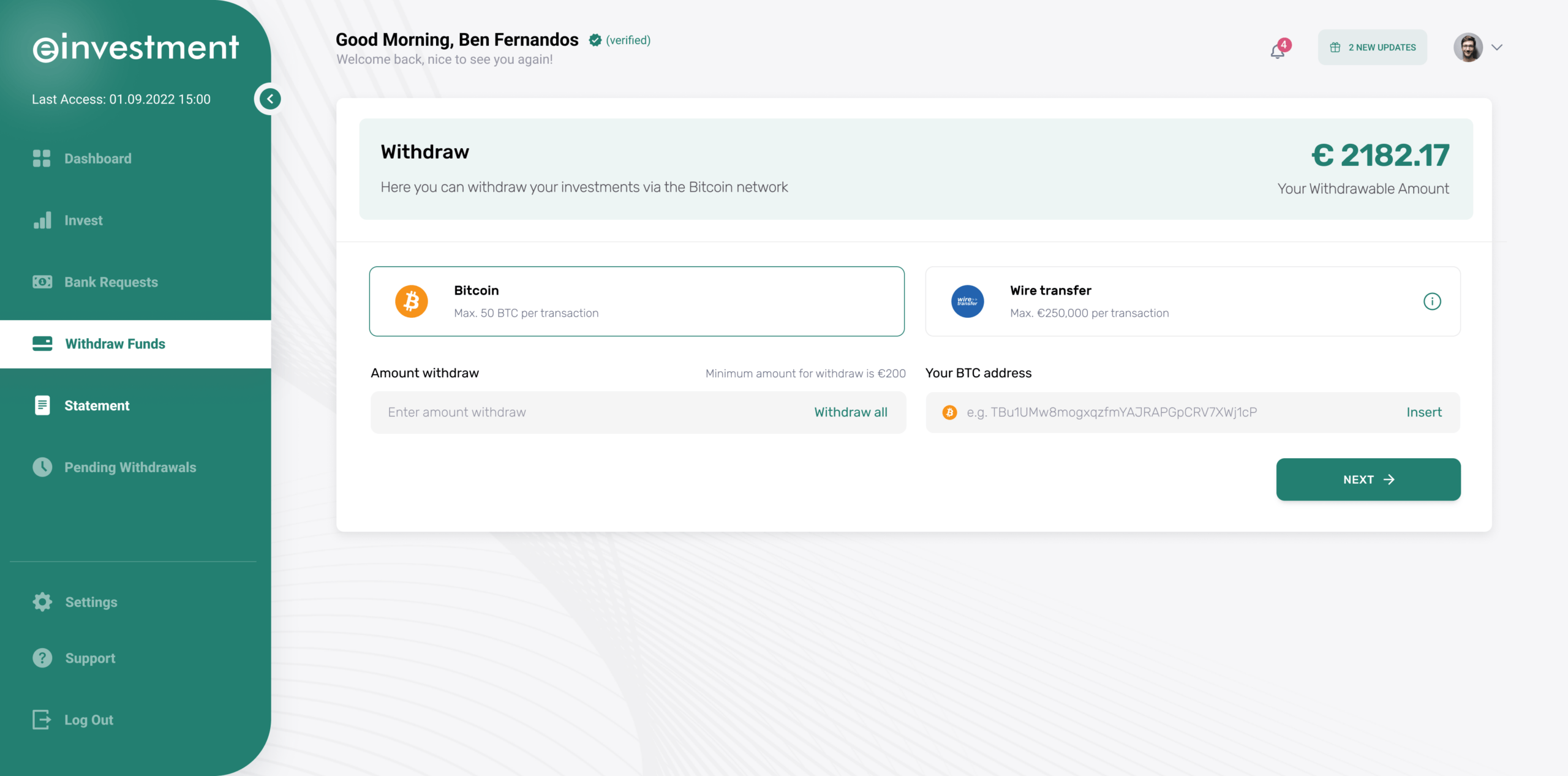
Another major feature we built is the withdrawal system. Users can request withdrawals using different methods, including:
- Bitcoin withdrawal
- wire transfer withdrawal
The withdrawal functionality includes:
- current withdrawable balance
- minimum withdrawal amount
- payment method switching
- wallet address input for BTC
- bank account details for wire transfer
- staged form completion
- next-step processing
This is one of the features that makes the project feel like a real financial operations platform rather than just a static investor portal. Withdrawal flows require careful frontend validation and backend handling because they directly affect sensitive financial actions.
8. Pending Withdrawals and Transaction Visibility
To improve transparency, the platform also includes a pending withdrawals section where users can track:
- transaction IDs
- dates
- amounts
- withdrawal addresses
- transaction hashes / TxIDs
- completion or pending status
- cancellation actions where allowed
In financial applications, transparency is critical. Users need visibility into what happened, what is processing, and what has already completed. This part of the system helps reduce support load and improves trust by giving users access to their own transaction states.
9. Profile and Settings Management
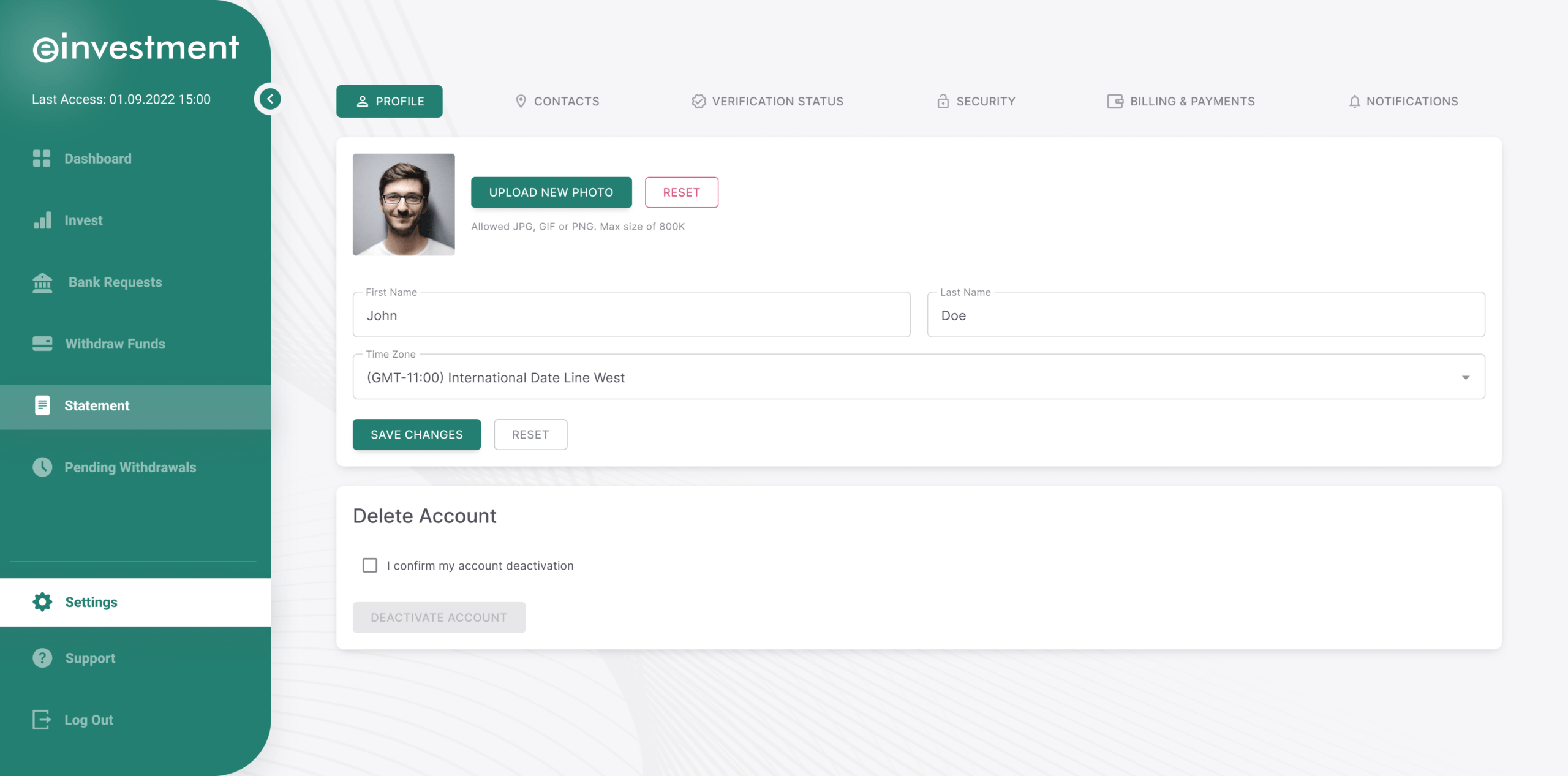
The account settings area includes:
- profile editing
- photo upload
- personal information updates
- time zone settings
- account security sections
- billing and payments
- notification preferences
- verification status access
- account deactivation / deletion confirmation
This type of settings area is a necessary part of a mature SaaS-style financial application. It gives the user control over their account while centralizing essential profile and operational preferences.
Technology Stack
This platform was built using:
- Laravel for backend development
- Vue 2 for dynamic frontend interactions
- Custom API for platform-specific business logic and data exchange
Laravel was used as the main backend framework to handle:
- user authentication
- account management
- business logic
- investment flow handling
- verification state processing
- transaction data
- withdrawal requests
- settings management
- API endpoints for the frontend
This is a strong choice for this kind of platform because it supports rapid custom development while remaining structured enough for complex business workflows. For a system with user state transitions, financial actions, and multiple internal modules, Laravel provides a solid architecture for maintainability and future growth.
Vue 2
Vue 2 was used to build the interactive frontend experience. It helped us create:
- dynamic onboarding steps
- reactive form validation
- dashboard widgets
- interactive charts and cards
- payment selection states
- investment calculators and APR displays
- settings interactions
- status-based UI updates
A project like this benefits from a reactive frontend because many parts of the system change depending on user actions, selected payment methods, verification status, and account data. Vue allows those interactions to feel smooth and modern without page reload friction.
Custom API
A custom API layer was essential because the platform needed more than generic CRUD behavior. The application includes platform-specific operations such as:
- investment product retrieval
- account state changes
- verification status management
- payment instruction generation
- withdrawal processing
- transaction history delivery
- financial dashboard data aggregation
That custom API architecture made it possible to keep the frontend flexible while centralizing business logic and data rules in a structured backend environment.
UX and Product Design Approach
One thing that stands out from the platform is that the UI was clearly built around trust, structure, and clarity.
For investment and fintech products, visual design is not just about aesthetics. Users are sharing personal data, selecting portfolios, making deposits, and requesting withdrawals. That means the interface must continuously communicate:
- reliability
- order
- transparency
- ease of use
This is why the product uses:
- clear sections
- large whitespace blocks
- visible step states
- concise financial summaries
- guided flows
- visually separated actions
- readable tables and dashboards
The dashboard and transactional areas were designed to feel informative without becoming visually overwhelming.
Business Value and Results
From a business standpoint, this project delivers value in several important ways.
First, it digitizes the full investor journey. Instead of requiring manual communication, fragmented tools, or back-office assistance for every stage, the platform allows users to move through a structured self-service flow.
Second, it improves trust and credibility. A professional investment dashboard with account verification, transaction visibility, and secure account settings gives the business a more serious and scalable digital presence.
Third, it supports operational efficiency. When users can register, verify, choose investment products, track performance, and manage withdrawals in one place, the company reduces manual workload and creates a more scalable client servicing process.
Fourth, it creates a foundation for future scaling. Because the platform is built as a custom Laravel + Vue application with modular flows and custom API logic, it can be expanded with additional features such as:
- more investment products
- admin-level control panels
- compliance tooling
- payment gateway extensions
- notification workflows
- reporting
- referral systems
- multilingual support
- advanced analytics
Why This Project Matters in Our Portfolio
This project shows our ability to build more than marketing websites or simple business dashboards. It demonstrates experience with:
- complex user flows
- financial platform UX
- account lifecycle logic
- verification states
- payment handling
- withdrawals
- transactional dashboards
- custom web application development
It is a strong example of how we design and develop scalable web systems that combine business logic, user experience, and technical architecture into one complete product.
For companies looking for a team that can build serious internal systems, customer dashboards, fintech products, SaaS platforms, or workflow-heavy web applications, this project is a strong proof of execution.